
What Stress Score Measures
Stress Score is a health metric commonly measured by wearable devices.
Popular wearables include:
- Apple Watch
- Garmin
- Oura Ring
- Whoop
These devices analyze physiological signals to estimate recovery, stress and fitness.
Why Stress Score Matters
This metric helps understand:
- physical recovery
- cardiovascular fitness
- stress levels
- sleep quality
Changes in this metric can indicate improvements or problems in health.
Typical Values
Typical values vary depending on age, fitness level and lifestyle.
| Age | Typical Range |
|---|---|
| 20-29 | Example |
| 30-39 | Example |
| 40-49 | Example |
| 50-59 | Example |
| 60+ | Example |
Factors That Influence Stress Score
Many lifestyle factors influence this metric:
- sleep quality
- stress
- training load
- alcohol consumption
- illness
Tracking trends over time is more important than single measurements.
How to Improve Stress Score
Ways to improve this metric include:
- improving sleep quality
- regular exercise
- reducing stress
- limiting alcohol
- maintaining consistent routines
Wearables That Measure Stress Score
Many wearable devices estimate this metric:
- Apple Watch
- Garmin
- Oura Ring
- Whoop
Visualization

What Stress Score Measures
Stress Score is a wearable health metric used to interpret stress, recovery, sleep and fitness patterns.
Depending on the device, this metric helps estimate:
- recovery status
- physiological stress
- training readiness
- long-term health trends
Why This Metric Matters
A single value is rarely enough on its own. What matters most is how Stress Score changes over time.
This metric helps you:
- detect unusual strain early
- plan recovery more intelligently
- interpret wearable data more accurately
- understand longer-term health and fitness patterns
Typical Values
| Score | Interpretation |
|---|---|
| Low | Low physiological stress |
| Moderate | Manageable stress load |
| High | Elevated strain and reduced recovery |
What Influences This Metric
Common factors include:
- sleep quality
- mental stress
- training load
- alcohol intake
- illness or infection
- time of day and measurement conditions
How to Improve This Metric
Depending on the metric, useful levers often include:
- more consistent sleep
- a stable training routine
- less alcohol
- better recovery habits
- lower daily stress
- following trends instead of isolated values
Wearables That Track This Metric
Common devices and platforms include:
- Apple Watch
- Garmin
- Oura Ring
- Whoop
Measurement method, accuracy and presentation differ between devices.
Useful Internal Links
Recommended RECOVERY Trackers
Understand Your Health Data
LongLife Scan analyzes wearable health data and helps you understand patterns in stress, sleep and recovery.
Try LongLife ScanRelated Metrics
Health Metrics
Overview of wearable health metrics including HRV, VO2max, sleep and recovery.
View Metric →
Related Charts
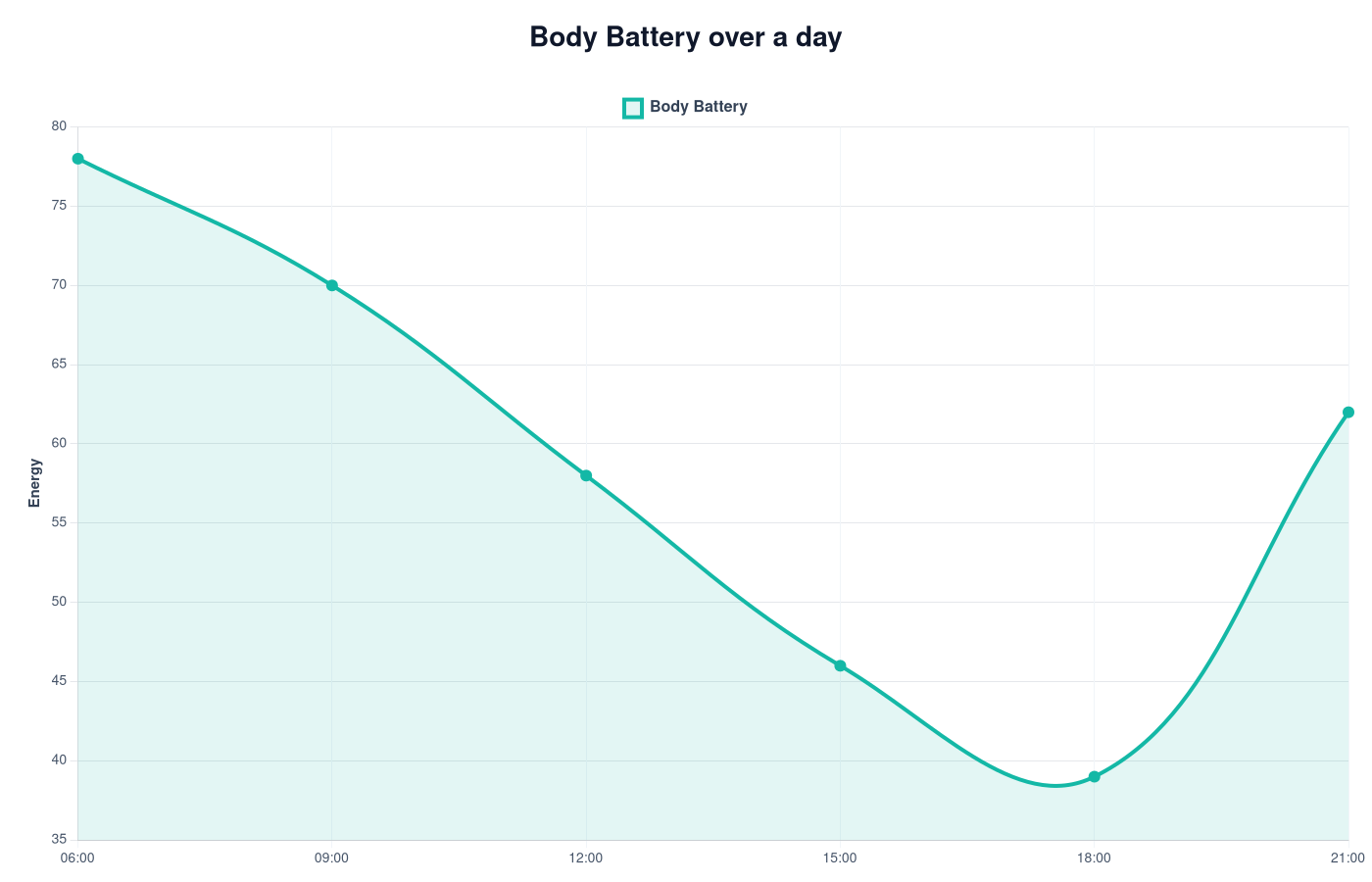
Body Battery Chart
Body Battery charts show how wearable devices estimate energy, recovery and stress patterns during the day.
View Chart →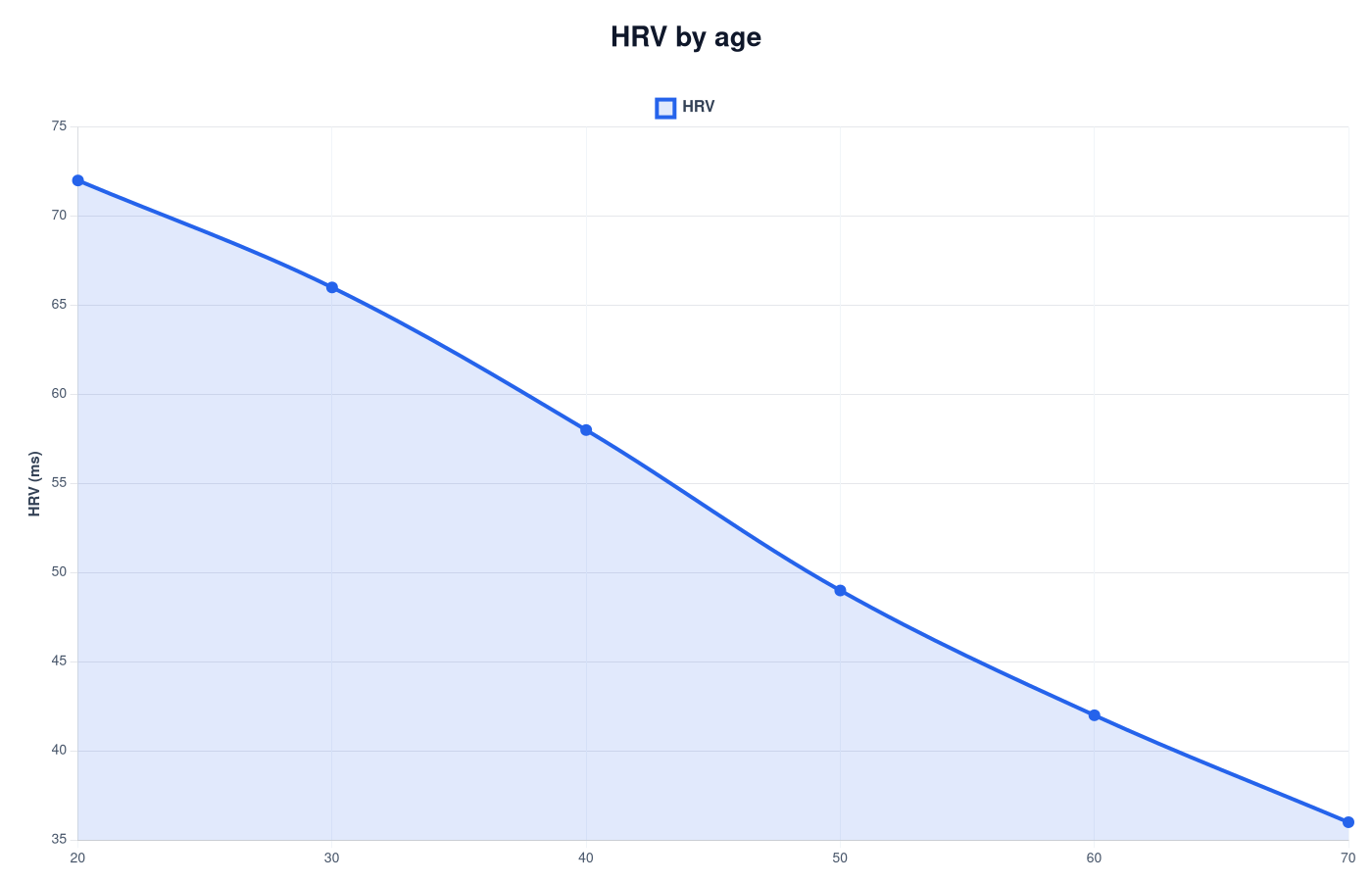
HRV Chart – Typical Heart Rate Variability Ranges
HRV trends show recovery and stress patterns over time.
View Chart →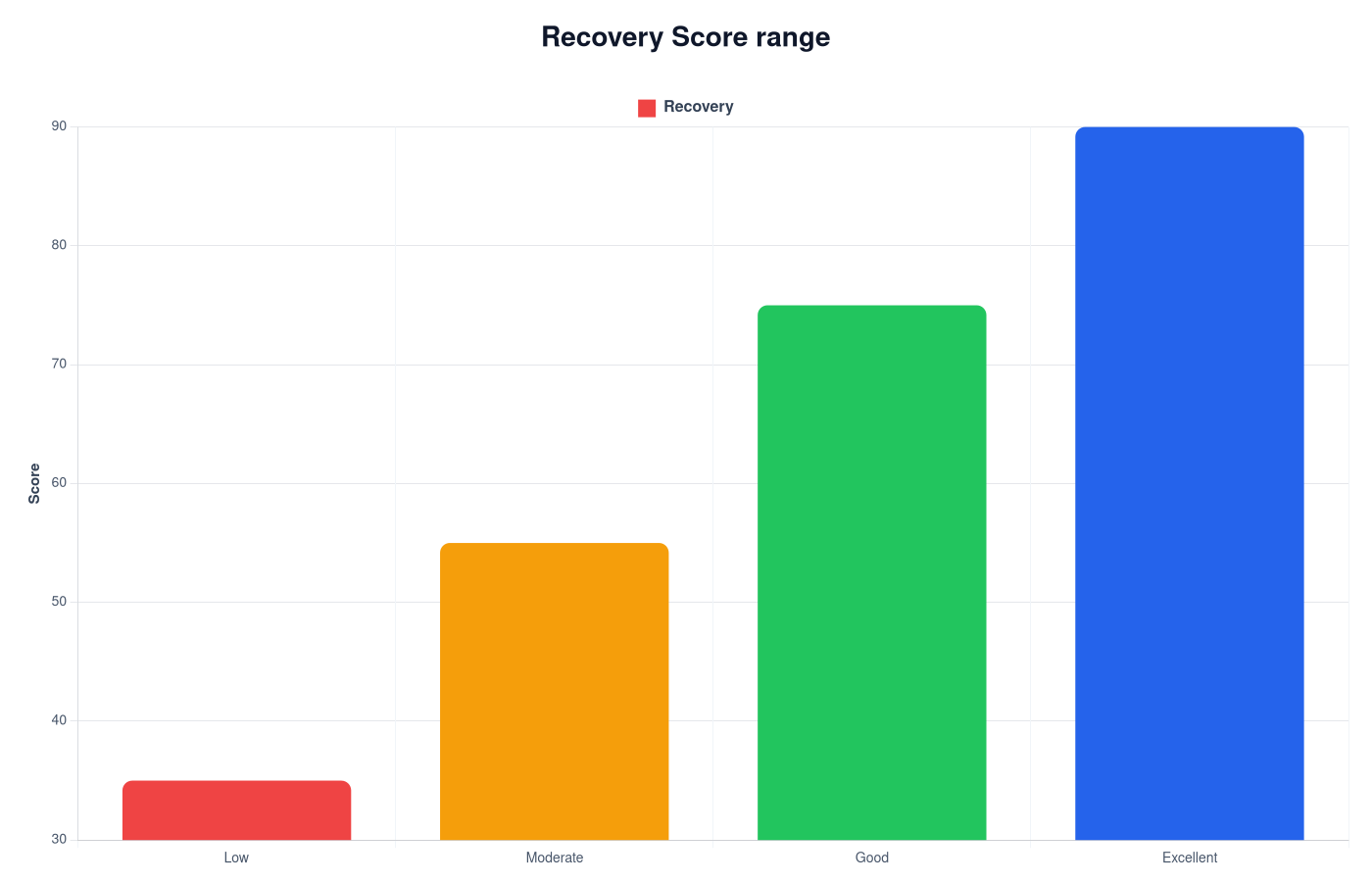
Recovery Score Chart
Recovery score charts show how wearables combine HRV, sleep and stress signals into one readiness value.
View Chart →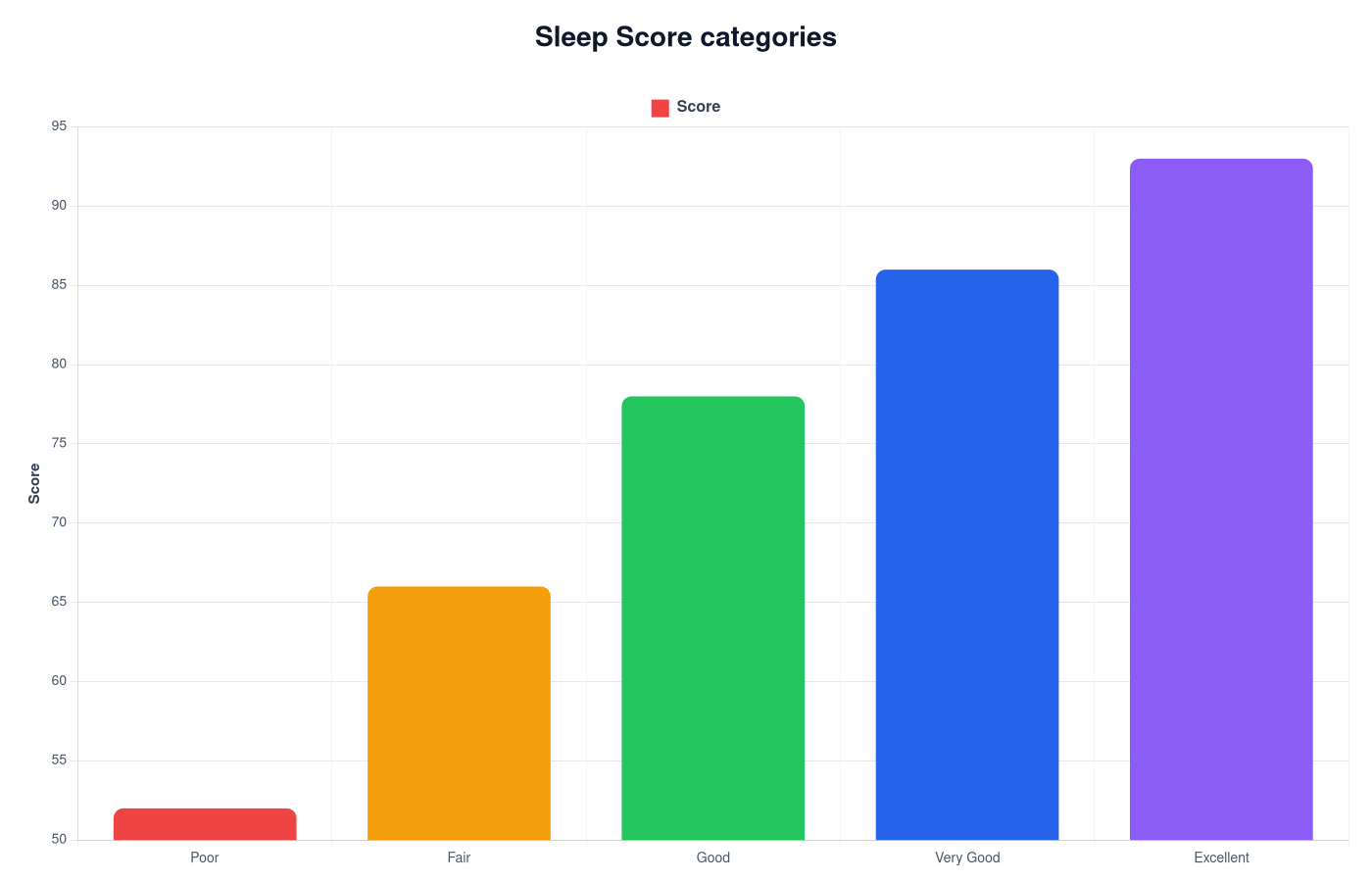
Sleep Score Chart – Sleep Quality Explained
Sleep score charts show typical score ranges and help interpret wearable sleep quality estimates.
View Chart →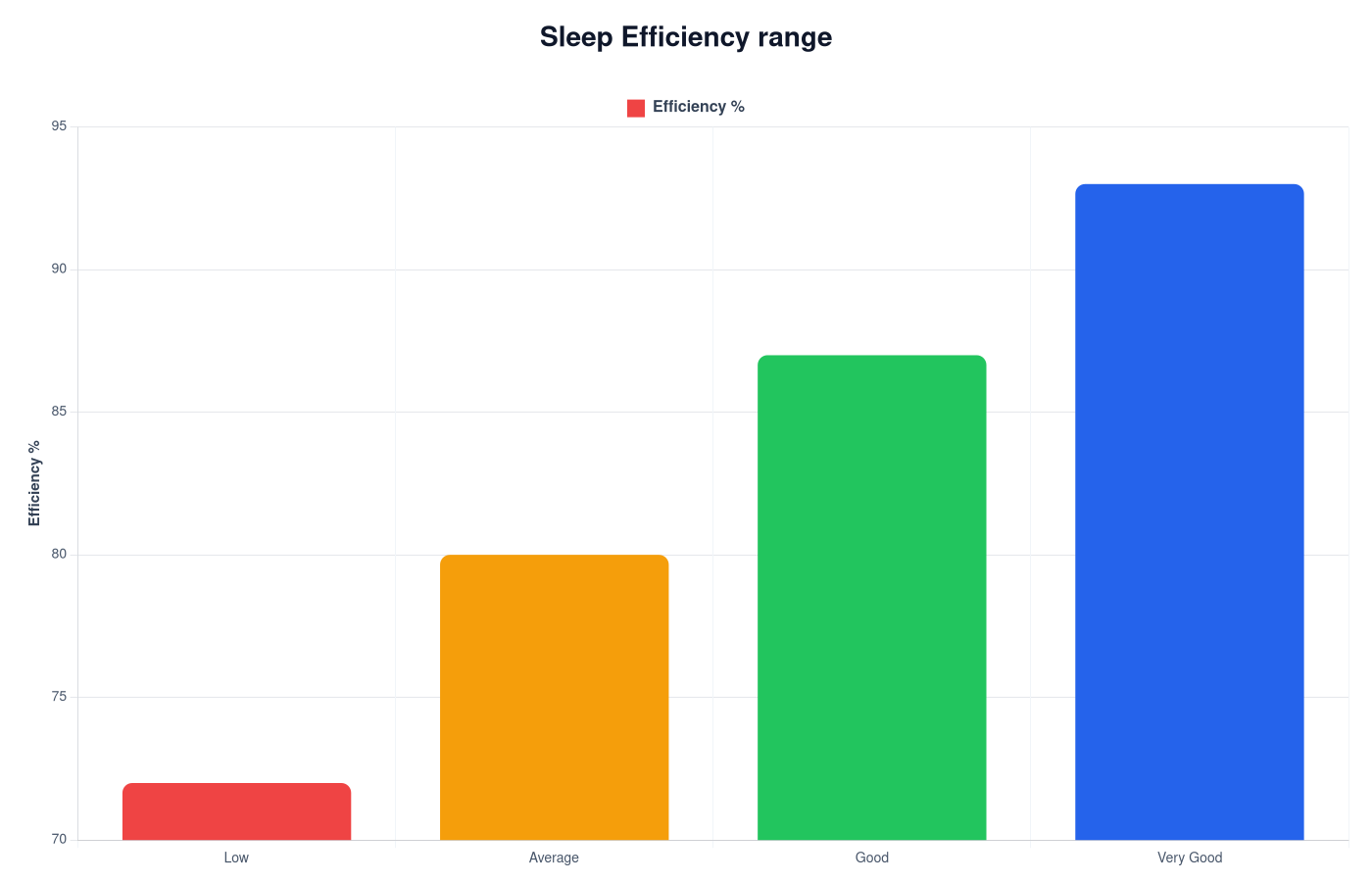
Sleep Efficiency Chart
Sleep efficiency charts show how much of your time in bed is spent sleeping and help interpret sleep continuity.
View Chart →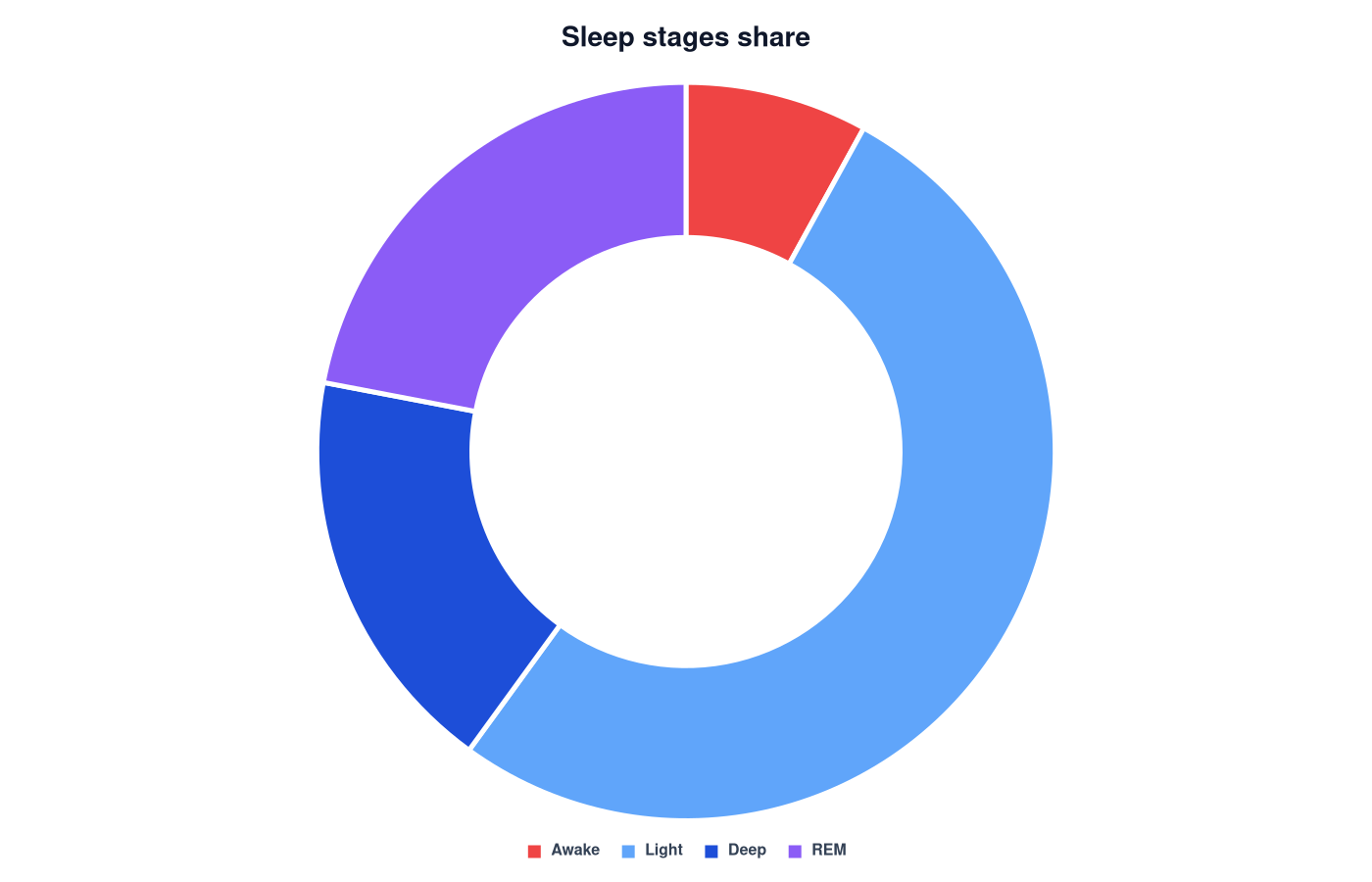
Sleep Stages Chart
Sleep stages charts show how sleep cycles are distributed between light sleep, deep sleep and REM sleep.
View Chart →